Zoran Music | Klagenfurt City Gallery | January 2020
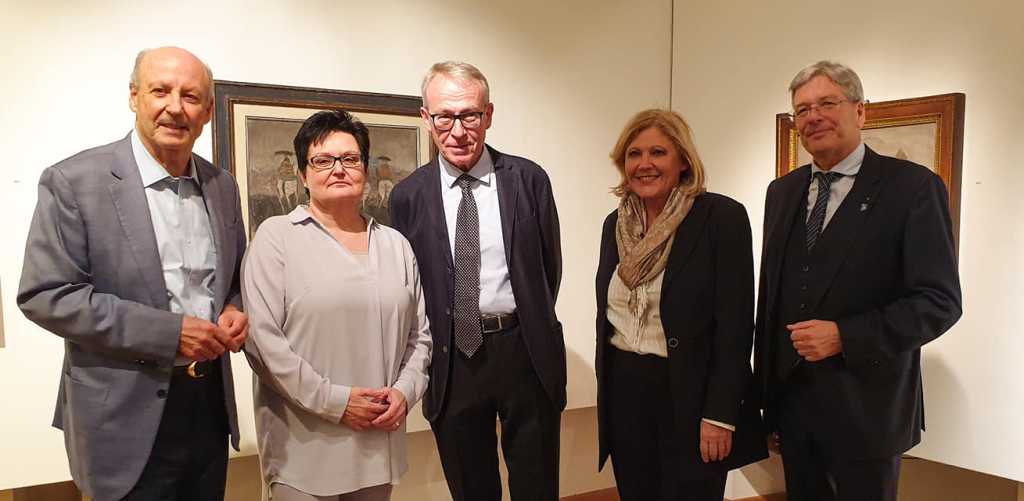
This largest Mušič exhibition ever shown With museum-quality standards, the exhibition presents around 180 works by the international artist from 21 private collections in Italy, France, Germany, Slovenia and Austria, from the 1940s to his late work.
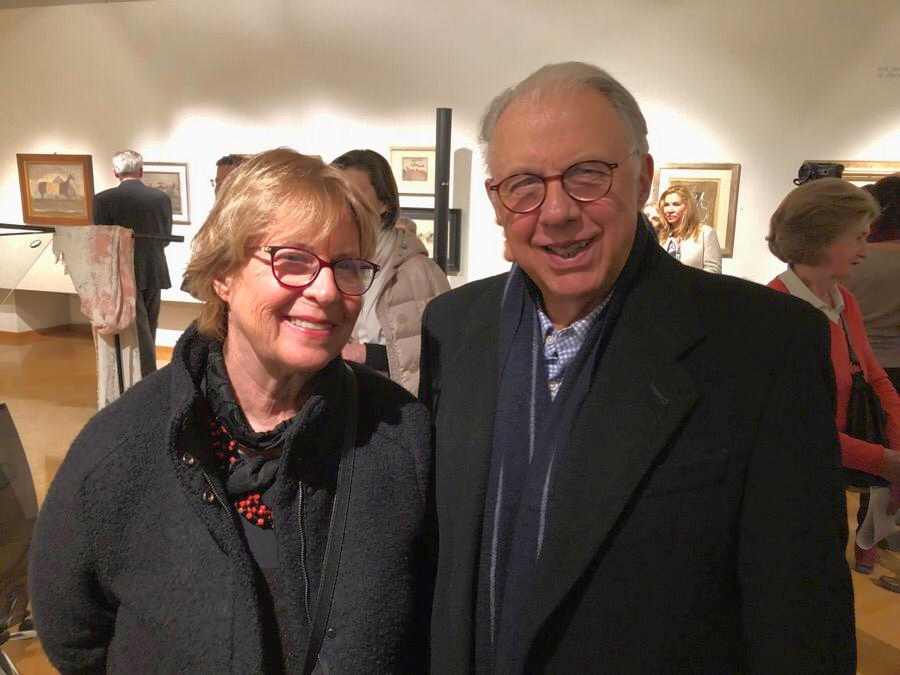
At the opening on January 23, 2020 in the Klagenfurt City Gallery, More than 600 guests were present. You will be redirected to the Music exhibition page of the city gallery.
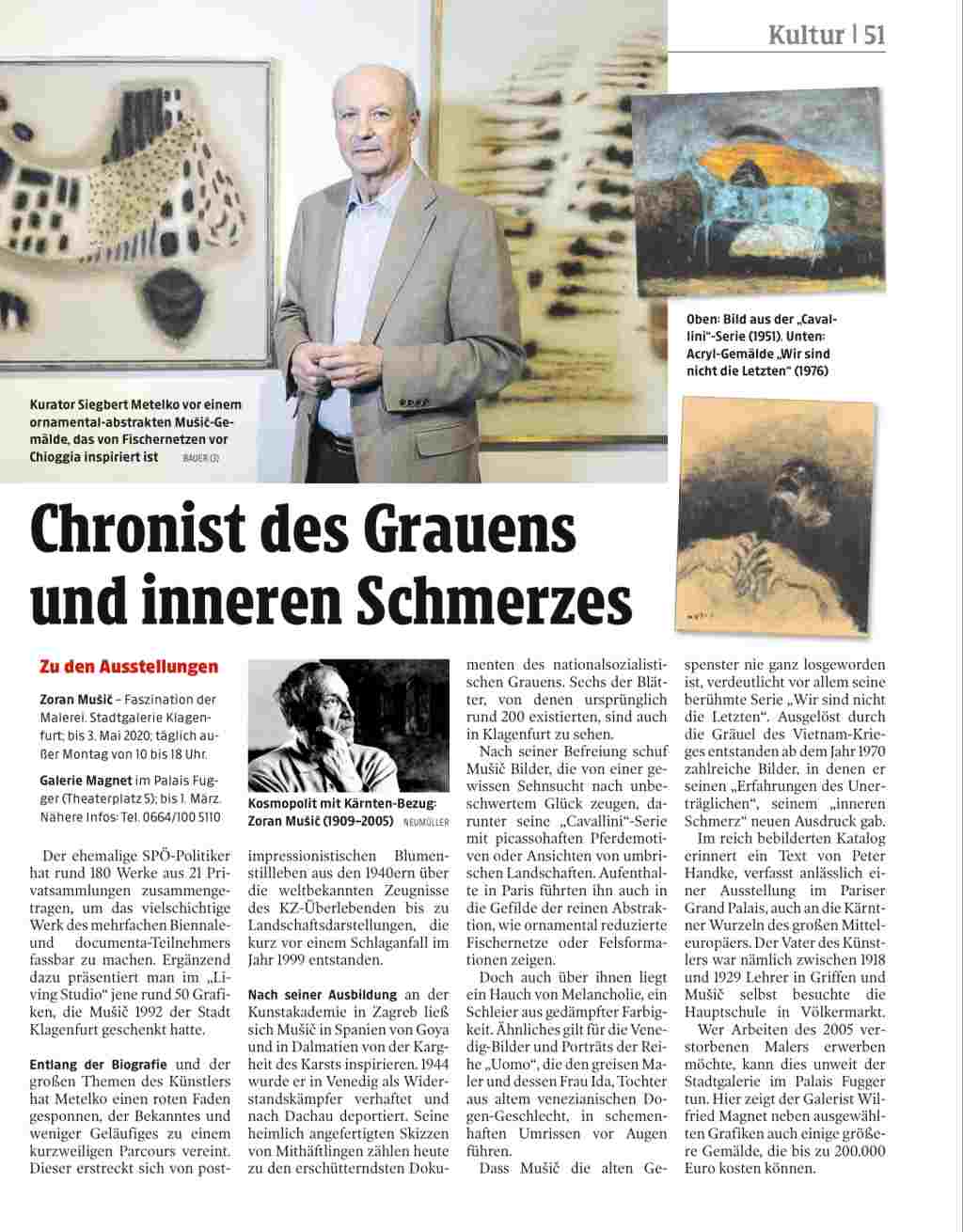
The exhibition encompasses all thematic areas: landscapes of Dalmatia, Tuscany, and Umbria; portraits and genre scenes of farmers and fishermen; cityscapes of Paris and Venice; and paintings from his famous Cavallini series. These depictions of horses became a symbol of freedom and humanity. Also included in the exhibition are his moving yet shocking works from the 1970s series „We Are Not the Last”—a testament to the indelible trauma of his experiences in the Dachau concentration camp.
For the first time, works from the world's most important collections will also be on display: the „Collectione LIA and MAURIZIO ZANEI“ from Trieste, the „LAH CONTEMPORY“ collection from Switzerland, and the „Collectione SONJA STANGELJ“ from Modena.
A notice: As part of the major presentation in the city gallery, around 50 works on paper, a donation from Zoran Mušicˇ to the city of Klagenfurt from 1992, will be shown in the side rooms – LIVING STUDIO – from January 23 to March 1, 2020.
SALES SHOW
Parallel to the exhibition in the city gallery, the Klagenfurt Galerie Magnet, Theaterplatz 5 (Fuggerpalais) Drawings and oil paintings for sale.
This exhibition is open until May 2nd, 2020:
Tuesday – Friday: 2 pm – 6 pm and Saturday: 11 am – 2 pm
Closed on Mondays, Sundays and public holidays
Excerpts from the opening speech by the curator of the exhibition, the Music expert and art curator Siegbert Metelko:
…„This exhibition is neither The result of the hedonistic whims of professional aesthetes, still influenced by a dealer or gallery owner. For the first time, a Music exhibition presents the views of 21 European collectors on the work of Zoran Music, under the motto „we show the best from our collections“...
…“What is also new is that the artist himself is quoted through personal remarks and statements on individual works and groups of works“…
…„Anyone who wants to understand the work of Zoran Music must also grapple with the question – where does Zoran Music come from? … What influence did his birth have in the fateful region we call Central Europe?“…
…“There is a fascination emanating from this work that requires effort. Anyone who does not engage with the personality of the master and his story will not find access to his world…“
…„The birthplace of Gorizia was then still part of the Austro-Hungarian Monarchy. Slovenian, German, and Italian were spoken there.”.
To give an idea of the mythic-historical concept of Central Europe, let's take a look at the city of Gorizia/Gorica. It is a city that defies both ethnic and historical definition: once the metropolis of a county that encompassed both the blessed Collio region and the valleys of present-day East Tyrol. Gorizia bordered the Republic of Venice, was culturally intimately connected to the lagoon city, but politically at odds with it. On one side was the House of Austria, heir to the Counts of Gorizia, and on the other, the Venetians in their star-shaped fortress of Palmanova. It was through this mixed Italian-Friulian-Slavic population that he became the painter of that mythical continent we call Central Europe. The motifs of the artistic regions of Veneto and Dalmatia, and the aesthetics of the Byzantine tradition of these eastern territories, formed the basis of his art. And ultimately, the fate that can be summed up in a single word: DACHAU.“
…„ Music paints a requiem for human civilization, whether in cheerful Paris, in the Karst region, or on its balcony in Venice…“
…“ Music was an awe-inspiring figure; nothing could shake him anymore: he had stared death in the face every day for months.
Music allowed dying and death into his art. The profound proximity of death— Music experienced it, not in the provocative thrill of Russian roulette, which turns death into a calculable risk, a social game, but in existential experience. To be more precise, he had looked into the eyes of thousands of corpses, piled like firewood in mounds in the snow in front of the crematorium at the Dachau concentration camp. Once one pile was burned, the next arrived. Music sketched these mounds of corpses, secretly, whenever he could find a piece of paper…“
Zoran Music survived.
When he returned to Venice, he wrote in the catalogue of the Naviglio Gallery:
„Finally the great light, finally the sun, endless sky to the low horizon of the lagoon, all this belongs to me, here I can breathe freely... Is it really true that no one is watching me? Is it real that I am free to paint?“
…“In just a few sentences, one can express the happiness of a person who lived in a world beyond all imagination, in a world where death was „normal,“ where horror was everyday life…“
From then on , Music viewed nature from this perspective. The gentle hills of Tuscany appeared to him like hastily concealed mounds of corpses, heaps of skeletons. And again and again, the silent scream from the open mouths of the dead forced itself upon him: „We are not the last, non siamo gli ultimi…“ The artist would never cease to articulate this scream anew in his paintings until his own death…
…Even decades after witnessing the horrific images firsthand, the night visions of the deadly eclipse still haunted the painter.
And yet, Zoran Music remained unshaken within himself. Where did he draw his inner strength from, I often wondered. Perhaps he had become strong because he had witnessed many deaths in his life and had therefore died many deaths inwardly. Perhaps his experience was similar to that of Dostoevsky, who, as a revolutionary-inspired young poet, was arrested and, wrapped in shrouds, stood chained to a post before a firing squad. A mock execution. Then the pardon was read to him, followed by the sentence: exile to Siberia. Under this impression, he became a prophet among Russian poets… Zoran Music became a prophet of Central Europe…
gallery owner Willi Magnet At the opening of the Zoran Music exhibition at the Klagenfurt City Gallery: On Zoran Music, Lower Carinthia, and Peter Handke. (From the opening speech)
My interest in Zoran Music, an extraordinary artist and remarkable person, has deepened more and more over the last 15 years. The „ Music bug“ has taken hold of me, extending far beyond my work as an art dealer.
Several notable aspects of Music's biography should be noted: His family moved to Lower Carinthia for a year and several months, specifically to Griffen, and he himself also moved to Völkermarkt. After the end of the First World War (his father, Anton Music, served as a soldier in the Austro-Hungarian Army), his parents, Music, and his younger brother, Ljuban, moved to Lower Carinthia, where his father taught at the Griffen elementary school.
The old elementary school, located directly below the castle hill, also served as the small family's home. They settled there for an extended period. They lived in an area then occupied by Yugoslav troops. Yugoslavia intended to annex southern Carinthia to its new state. Anton Music had apparently been appointed as a teacher in this region of Lower Carinthia by the SHS administration.
Zoran himself, just 10 years old, had finished elementary school and moved to a secondary school in Völkermarkt where he lived in St. Ruprecht in the convent of the school sisters, like in a boarding school, in order to attend school there.
In the autumn of 1989, Music went back to trace his childhood and, during a visit to Völkermarkt, remarked to the school sisters that he had gone to school there.
In 1920, the Music family left Griffen to live in Marburg/Maribor until 1923. The national pendulum had evidently swung in the other direction, as they faced considerable hostility after the Carinthian plebiscite and the decision of southern Carinthia to remain part of Austria.
From the 1980s onwards, Peter Handke, himself a native of Griffen, also encountered Zoran Music and these particular commonalities. This was soon followed by Handke's visit to Music's studio in Venice, and subsequently by the essay „Four Notes on Zoran Music and His Paintings,“ which we published in May 2019 in our book „ Zoran Music – Fascination of Painting,“ after 25 years. republished and, like all three other text contributions, also translated into Slovenian, Italian and English.
Recent press releases:
Virtual tour: Exhibition „Fascination of Painting“ – ZORAN MUSIC, Klagenfurt City Gallery
You are currently viewing placeholder content from YouTube. To access the actual content, click the button below. Please note that this will involve sharing data with third parties.
ORF Carinthia Today
ORF Carinthia
Video stream on KT1
Hopfmüller & Hlavac
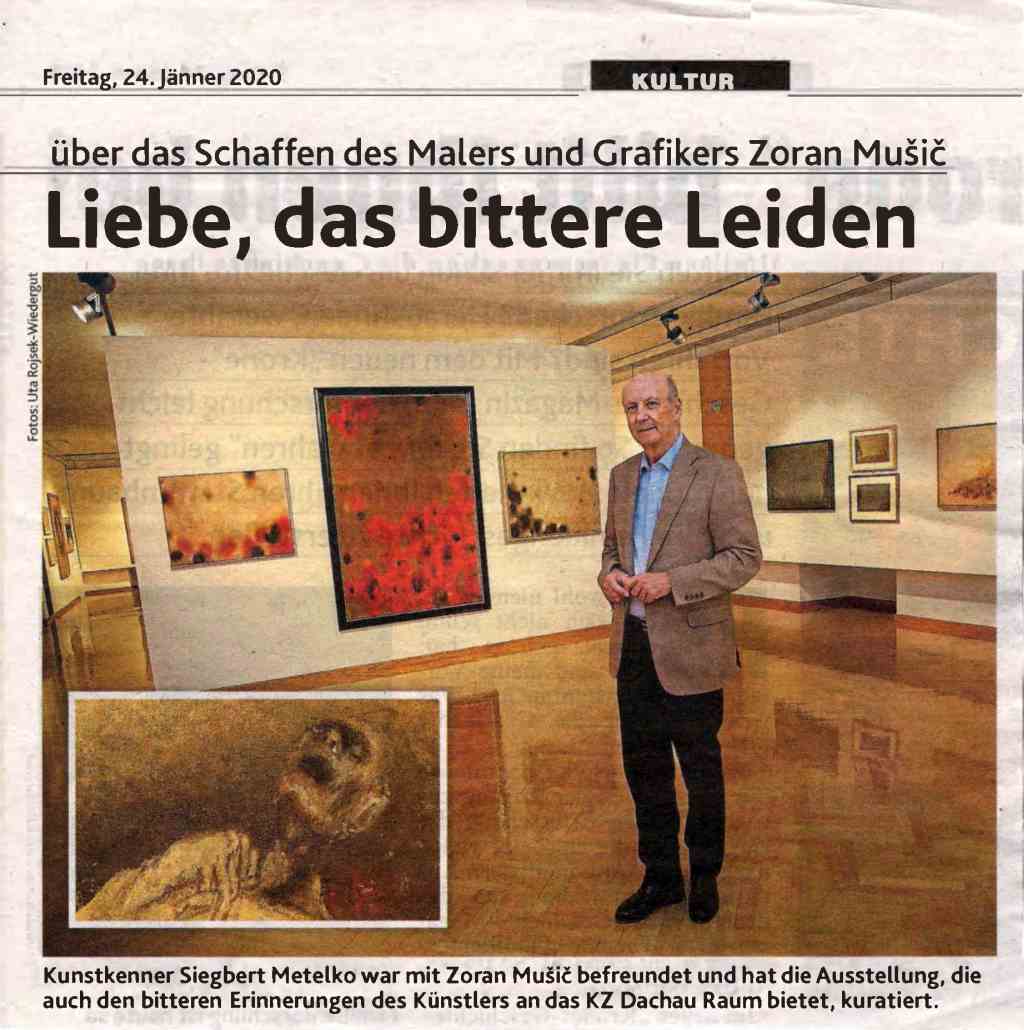
KLEINE ZEITUNG, January 28, 2020
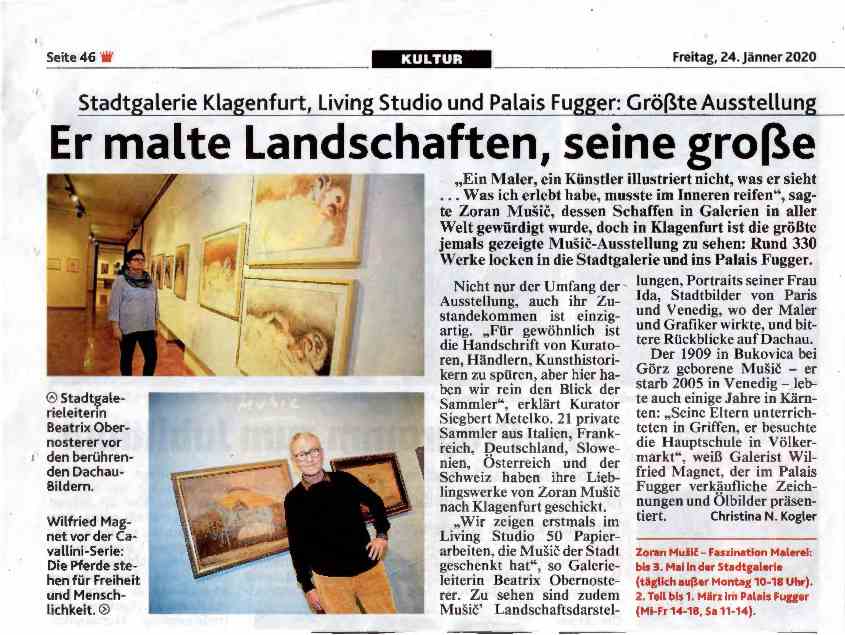
KRONEN ZEITUNG, January 24, 2020
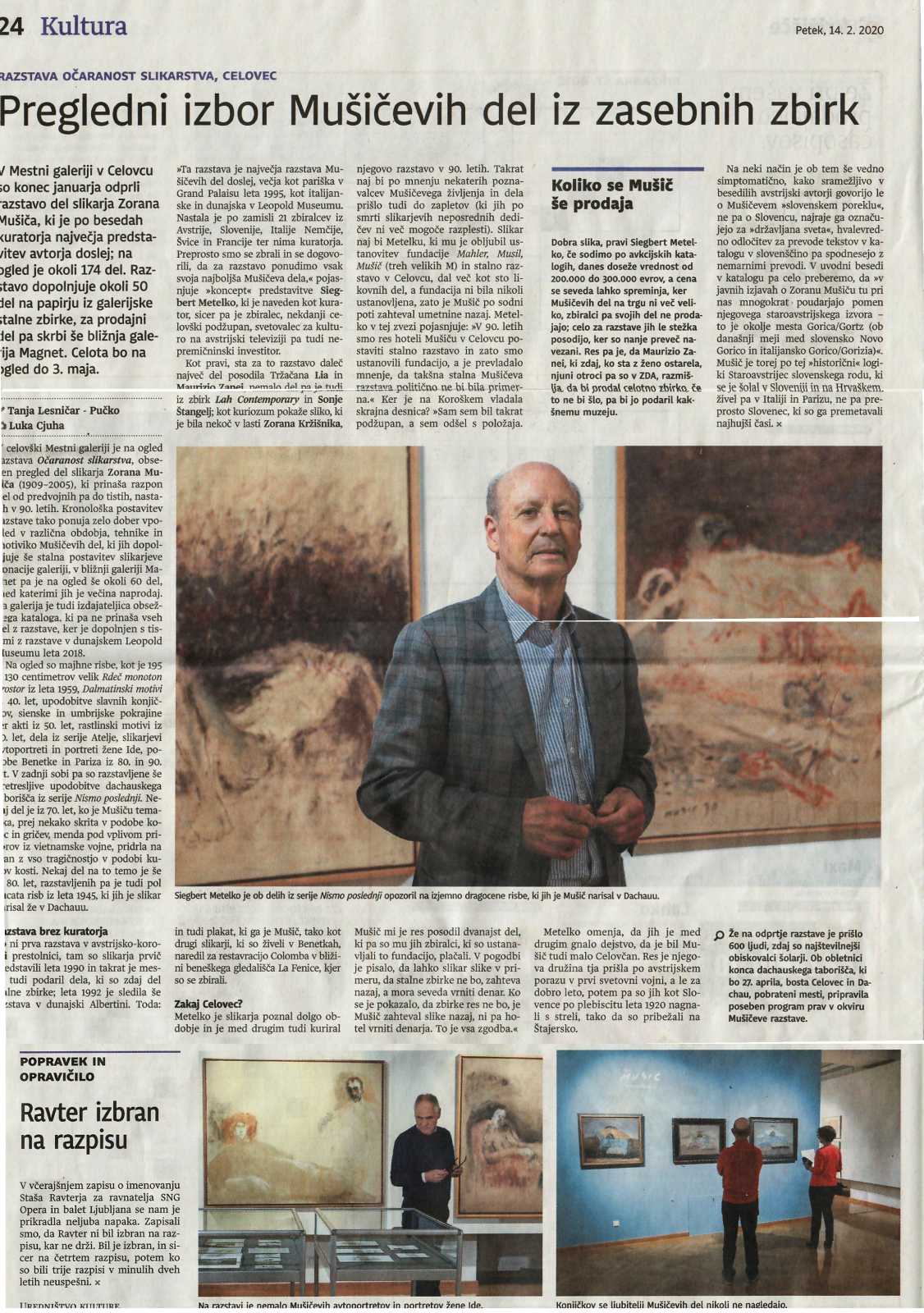
Dnevnik (SLO), 14.02.2020
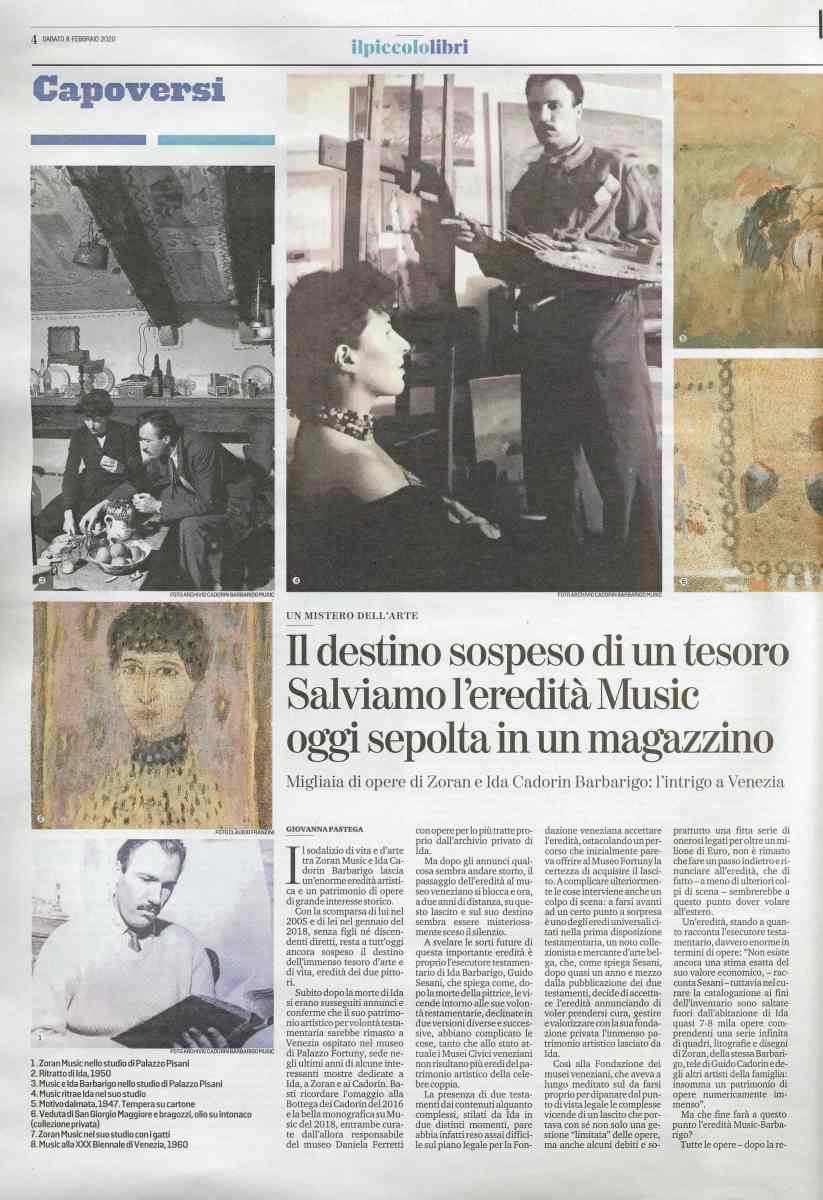
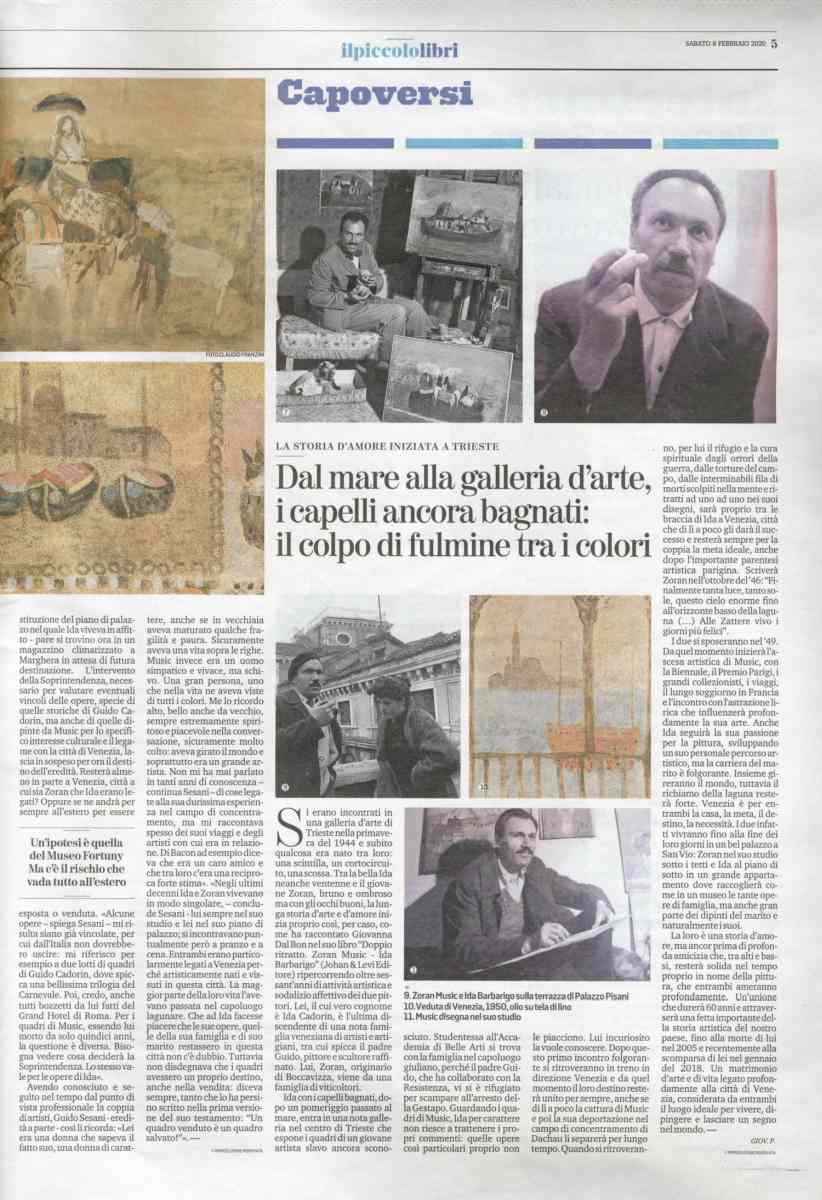
Il Piccolo Libri, February 8, 2020
All exhibitions featuring works by Zoran Music