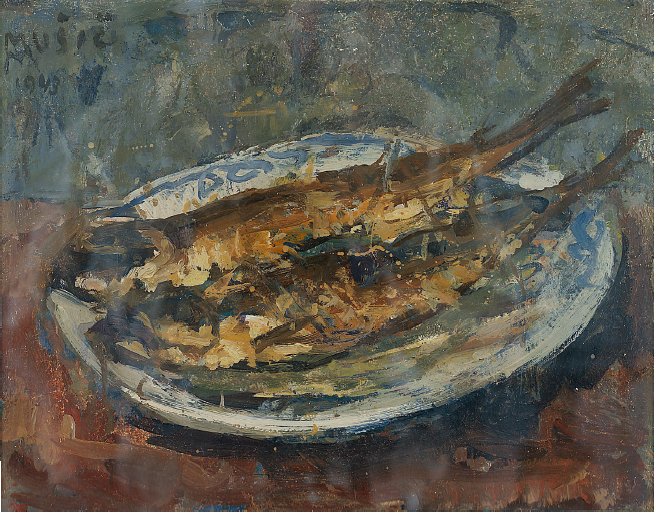
Fish | Shellfish
1943 – 1986
Music Works Collection
1943 – 1986
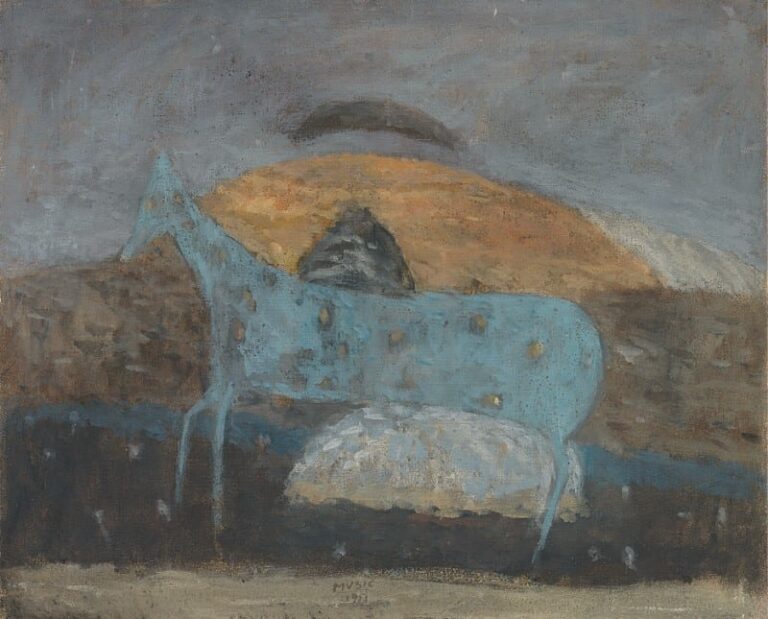
1945 – 1954
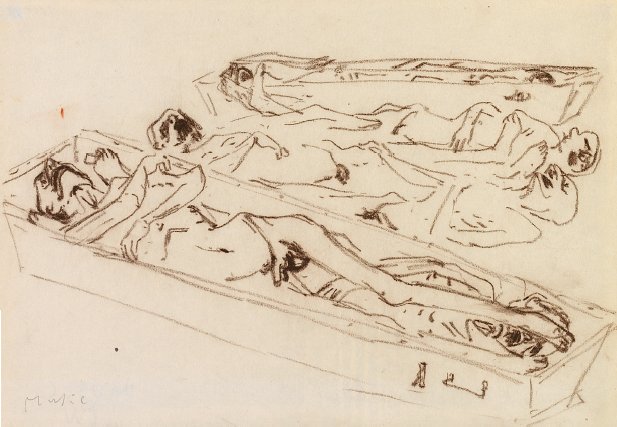
1945
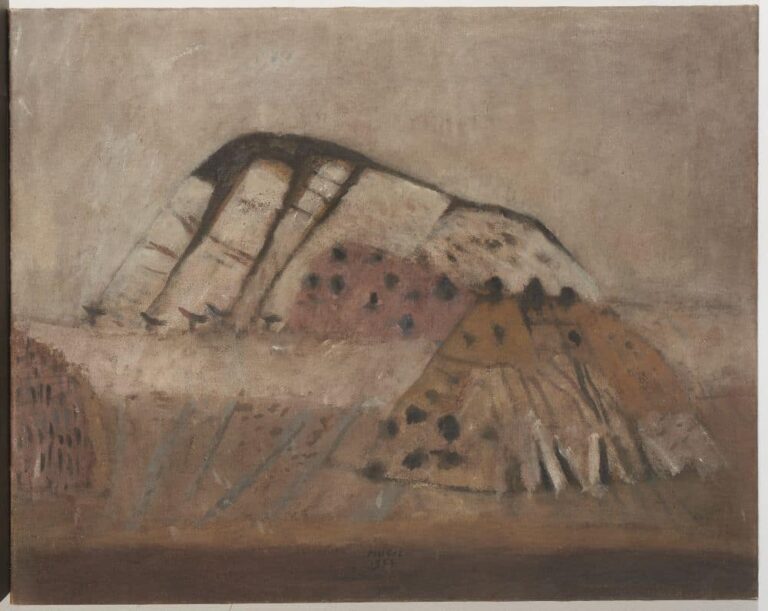
1945 – 1965
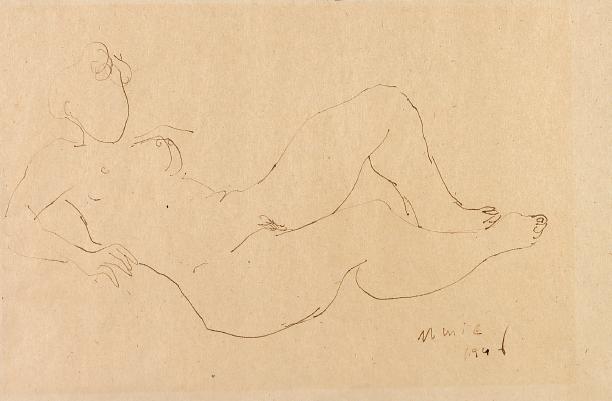
1946 – 1952
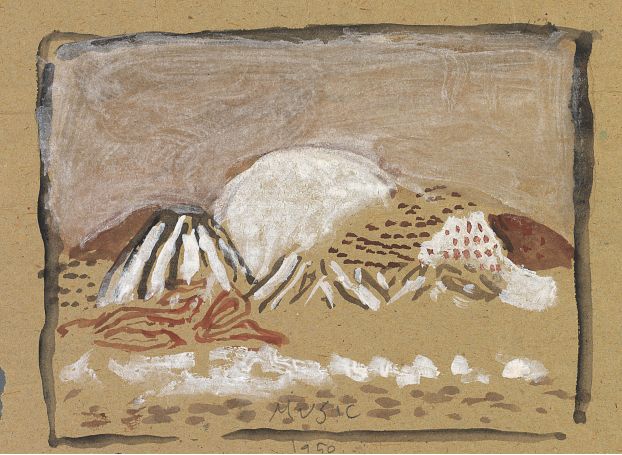
1948 – 1969
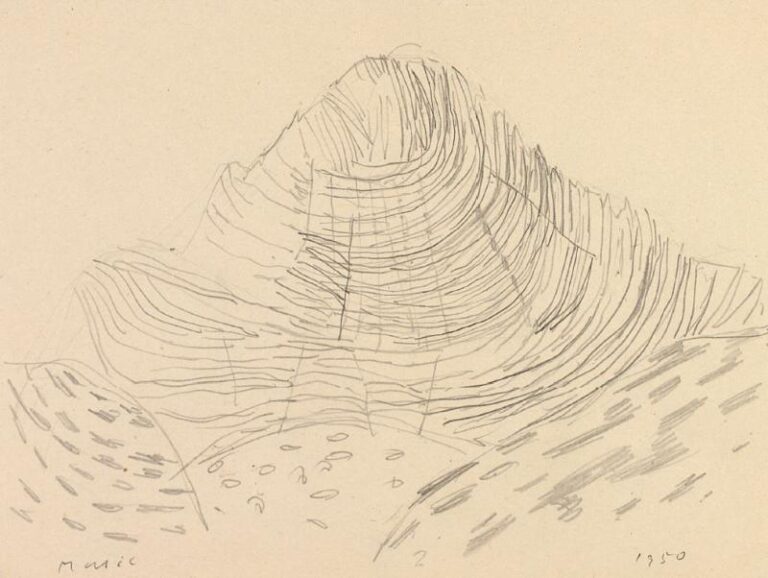
1948 | 1950 – 1968
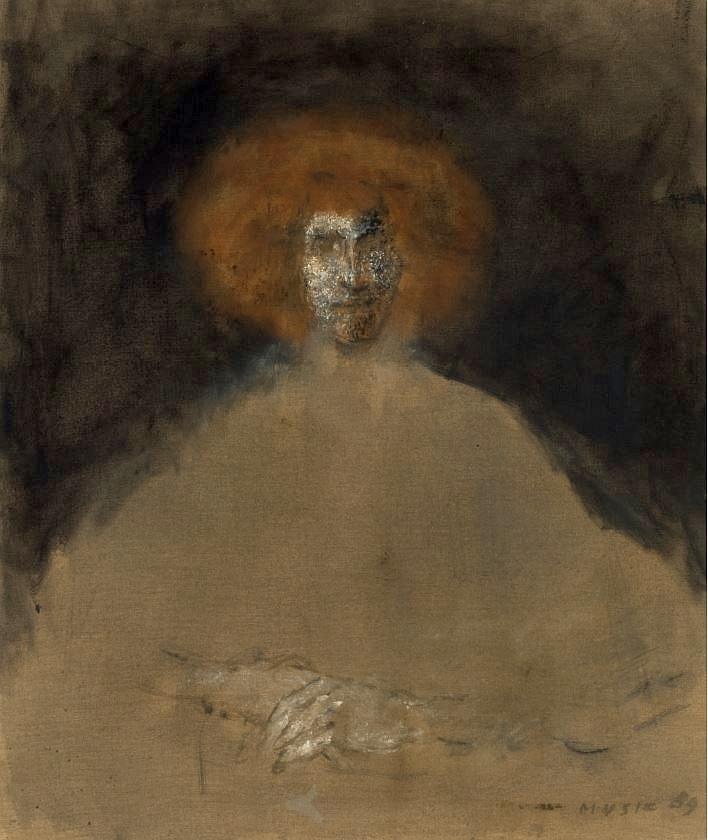
1950 – 1991
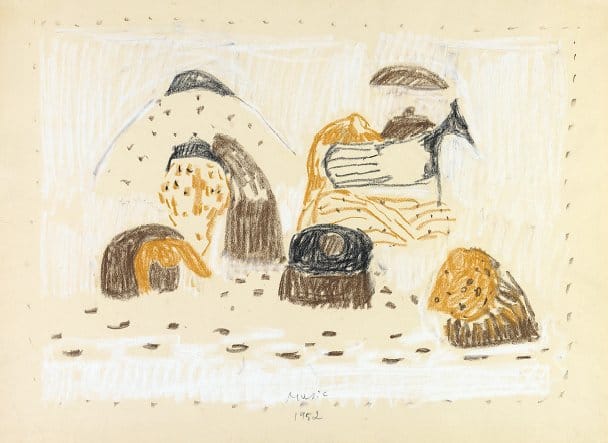
1950 – 1967
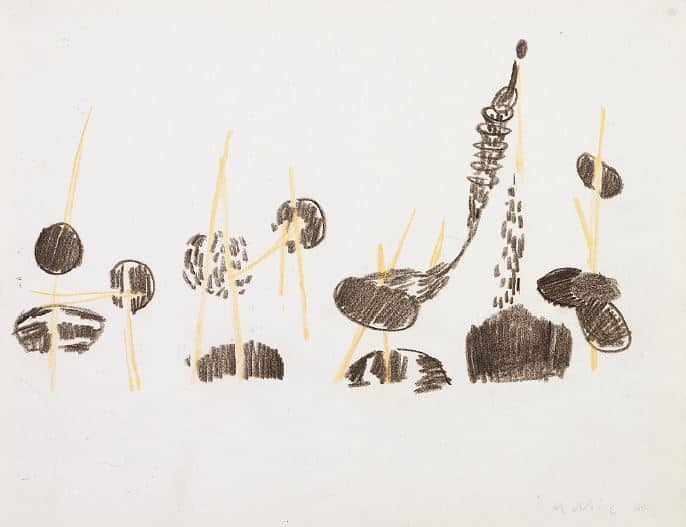
1954 – 1956
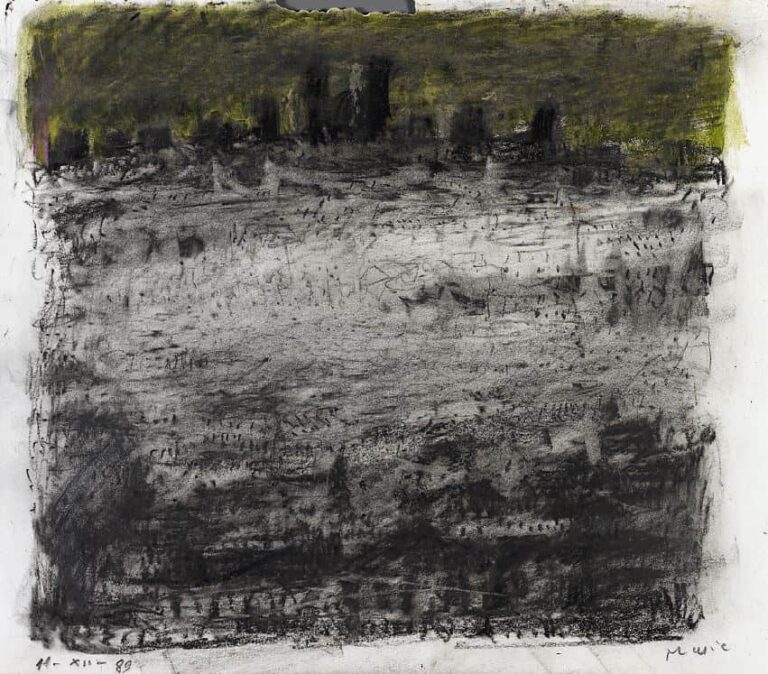
1988 – 1994
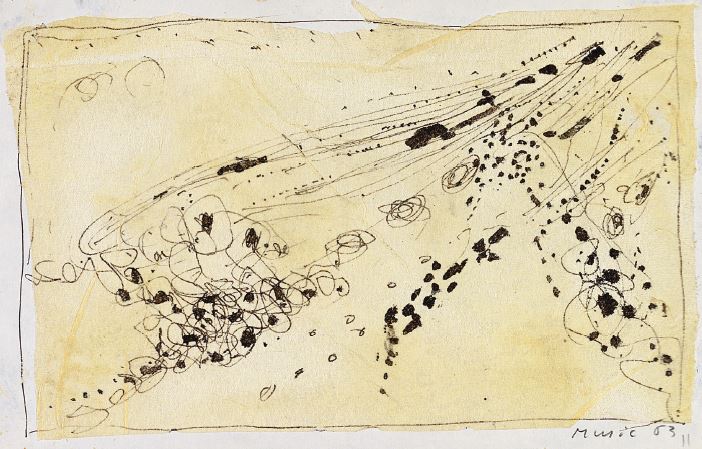
1962 – 1974
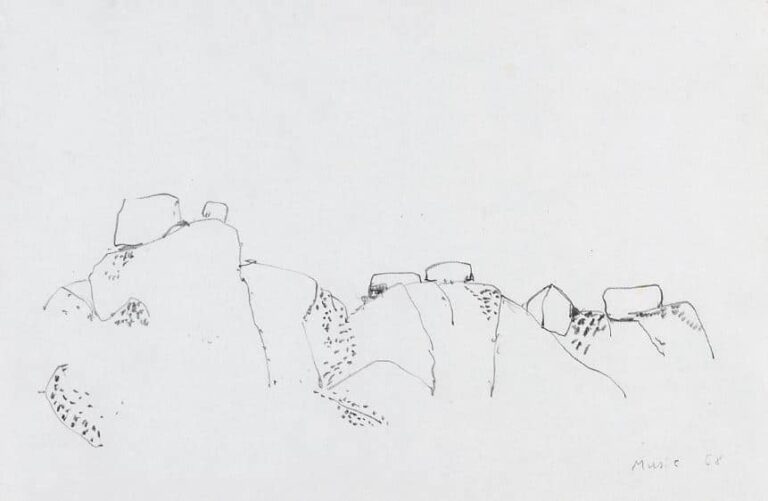
1968
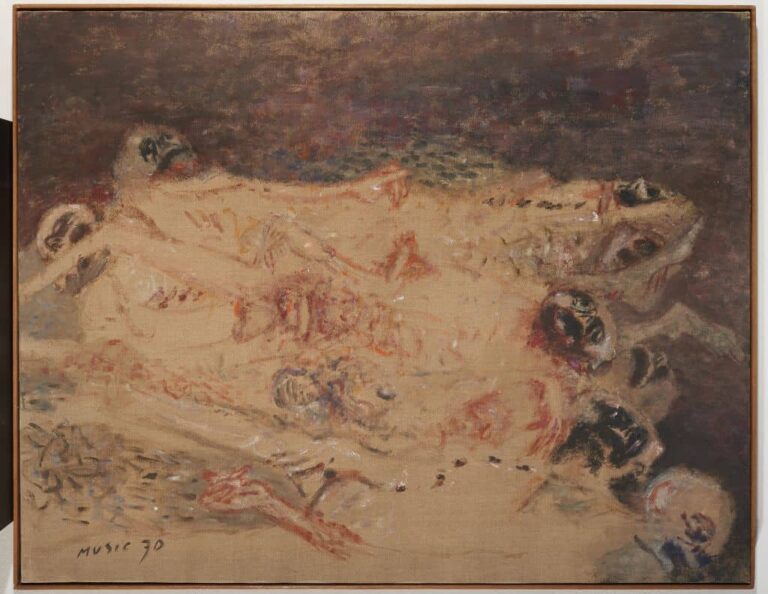
1970 – 1990
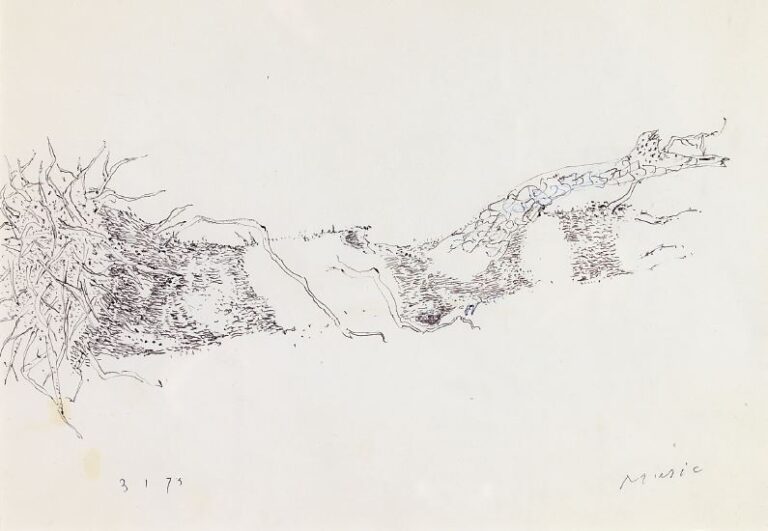
1972 – 1973
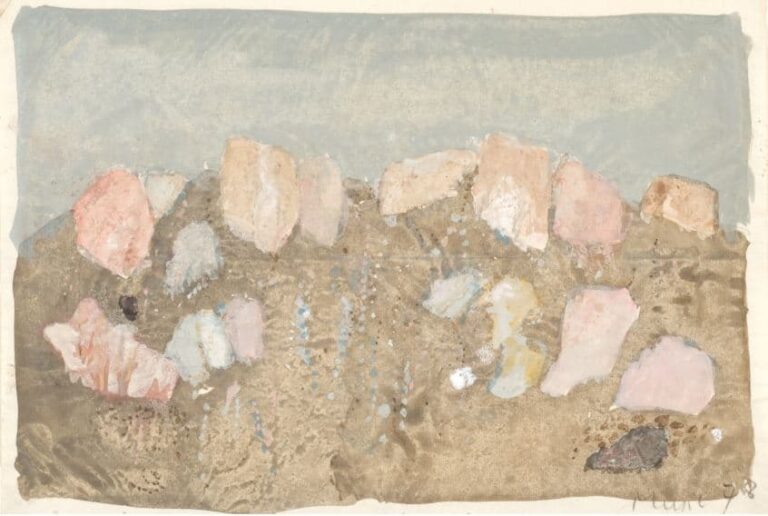
1977 – 1980
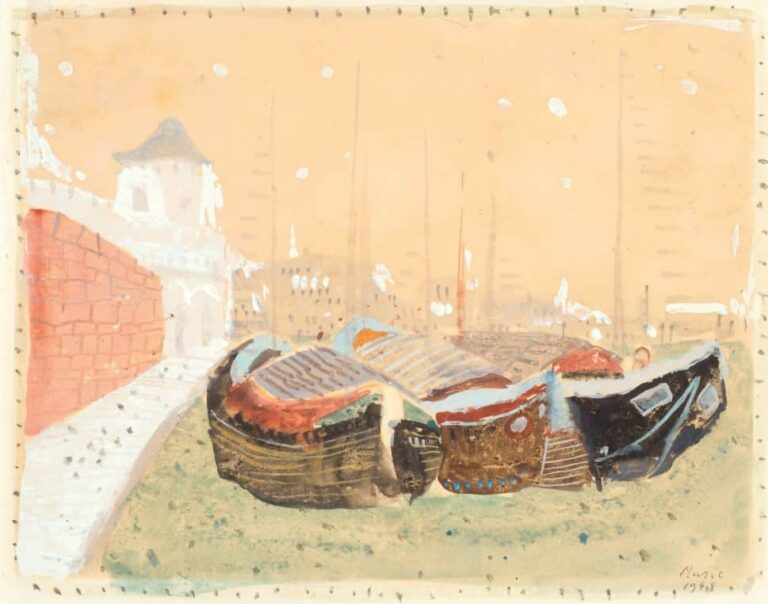
1947 – 1993
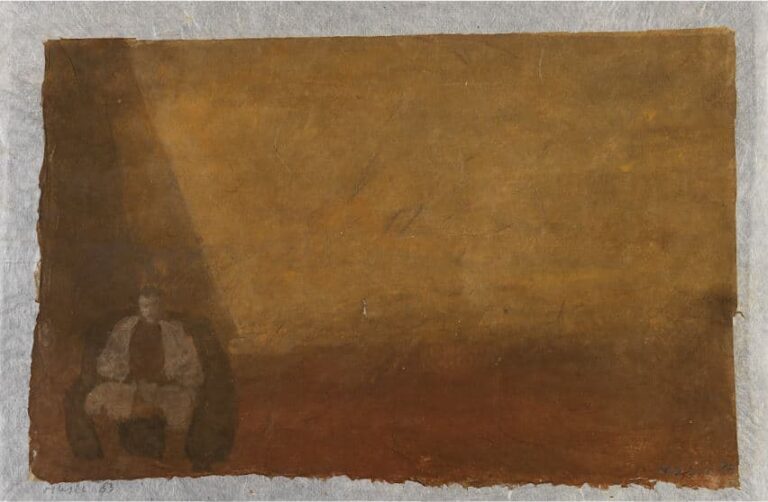
1983
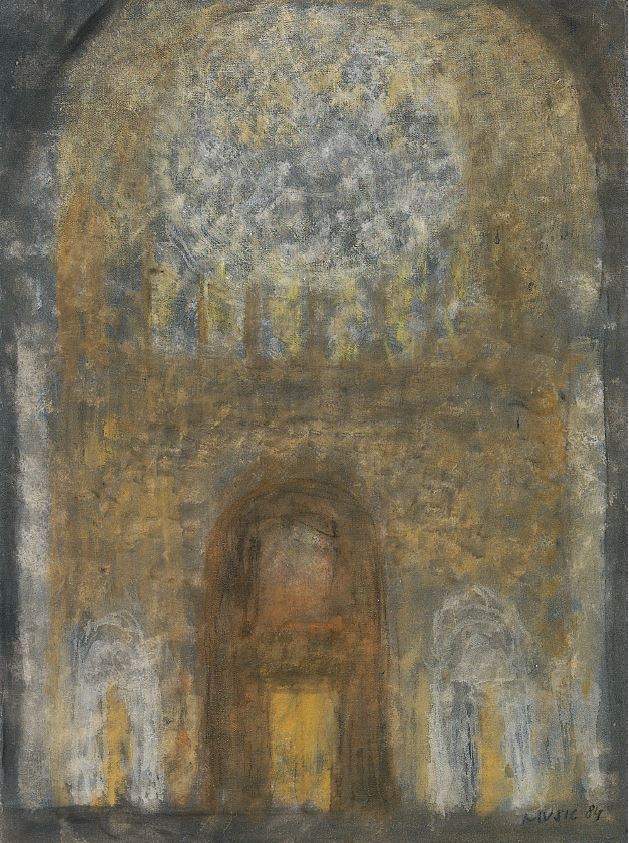
1983
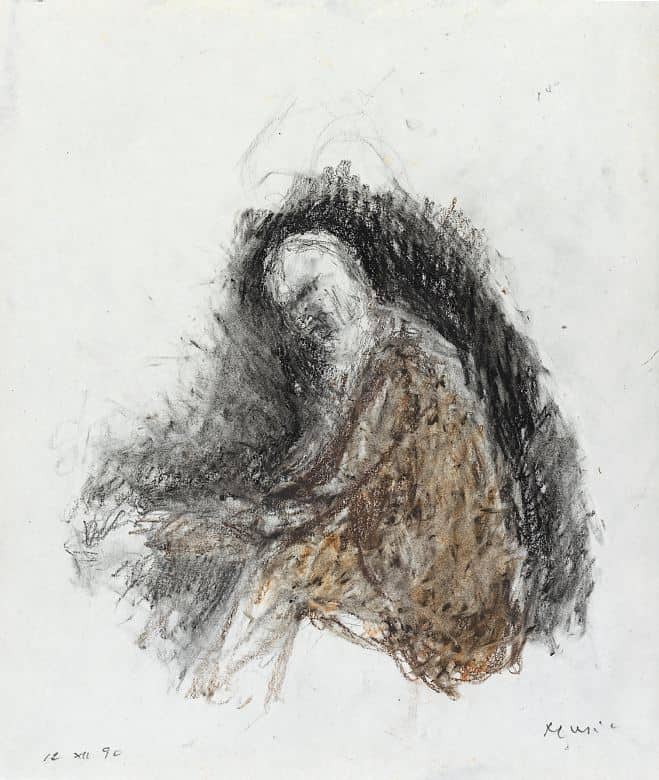
1986 – 1996
1989 – 1994
1991 – 1995
656 pages
The most comprehensive collection of works by Zoran Music from the anthology by Siegbert Metelko.
In this high-quality collection by Siegbert Metelko and Charlotte Hug from 2009, you begin a wonderful creative journey through the time of Zoran Music.
This 656-page book contains approximately 450 color plates and over 600 high-quality illustrations. The text is published in three languages: German, English, and French. The book weighs 5.2 kg.
Bring home many works by Zoran Music with this collection!
€98
(plus shipping costs)
You will be redirected directly to Galerie Magnet to complete your order.
From the collection
A final glimpse of Zoran Music, whom I had the privilege of accompanying for over 25 years, sometimes up close, sometimes from afar: The vaporetto passes under the Ponte dell'Accademia, heading towards San Marco. On the curved platform of the Palazzo Balbi-Valier stands the tall figure of the elderly gentleman, a strand of hair fluttering across his face in the evening breeze. But it would be pointless to signal to him as we pass. Zoran Music is almost completely blind. Yet he seems intently focused on something infinitely distant, as if desperately trying to fathom its meaning.
What lies behind the veil that cataracts have drawn before his scrutinizing eyes? What did the eyes of the dead, piled one on top of the other in the snow in Dachau, still perceive, their gaze Zoran Music never forgot? Why did his friend François Mitterrand go to Egypt, to the Cataract Hotel, shortly before his death? What did he desperately want to see one last time? Did he see it? Did he reveal it to Zoran Music ?
Lately, Zoran Music's gaze had narrowed, a tunnel vision with a diffuse sense of light at the end of the tunnel, like in the painting by Hieronymus Bosch in the Museo Civico Correr on Piazza San Marco. Zoran Music is dependent on what he has seen before: the mountains of the dead at Dachau, the tormented people who entrusted him with conveying to the living: „Non siamo gli ultimi“ (We are not the last). The dry karst slopes of Dalmatia with their
Little horses and donkeys. The red facades of Venice, the early morning mists over the boats bobbing on the Zattere; a daily walk from his apartment. And, again and again, a lifelong fascination and obsession with the face of his beloved, the mysterious Venetian woman with the chestnut-colored mane: Ida. Much more shadowy was the memory of his own reflection. Over the years, it had become an icon, not of his self, but of the unnamable behind every self.
I recall the lucid, prescient portrait that Raymond Cogniat wrote about Zoran Music back in 1972: only much later did he become this figure.
And Jacques Lassaigne, director of the Musée de l'Art Moderne de la Ville de Paris, said in the same year:
Music's work is not a cry of rebellion, it does not raise an accusation. Rather, it is a meditation on what he experienced in the concentration camps. He himself traversed all the circles of hell. But today, under his hand, the most horrific subjects retain a kind of discretion, a kind of purity. The image speaks for itself, without ever becoming theatrical or literary. Goya was content to write under some of his etchings: „This is what I saw.“ Music reveals suffering, redeems it, in a sense. Through the magical act of painting, the tragic figures he conjures are transformed into strange blossoms. Delicate shadows gather in the protruding bones of faces, in the eye sockets, and in the mouths. Death, no longer viewed from the outside but in this intimacy, acquires a disturbing attraction. In their decay, the emaciated human bodies assume immense dimensions: apparitions that speak a direct language. A palette of colored gradations, delicate pinks, grays, and ochres, plays across deep black tones. A testament to the fact that art is life.
But how can a person live with these memories, even if they capture them in their paintings year after year? Over the course of our friendship, I had repeated opportunities to speak with Zoran Music about his existential secret.
To this day, I feel the eyes of the dying follow me. They have never left me since: I still see them, the hundreds of glances that pleaded for my help, that perhaps also accused me, as I clambered over their bodies in the ghostly landscape of the concentration camp, forging my way through them. Shining eyes that silently begged for the help of those few who were still able to walk. When evening came, the dying and the others already presumed dead were stacked on top of each other like logs. It looked like a pyre, almost a kind of tower. A ghostly tower: it seemed to me that it trembled and creaked. But these sounds, they were perhaps nothing more than the last gasps of the dying. During the night, it began to snow lightly; it was March. And the next morning, the tower no longer moved.
It was an absurd, unreal world to live in in the concentration camp. The rules were alien, but there was a meticulous order; it was cruel, cruel beyond all comprehension. Anyone who possessed even the slightest authority, I was allowed to crush you like a worm. But strangely, we accepted this reality as if there were no other possible order. In the end, one doubted whether there was even an outside world beyond the barbed wire.
Waiting, apathy. I lived in a landscape of the dead and the dying. Nothing but piles of corpses. A gruesome image haunts me: It was midday. A living skeleton of a prisoner clutched his bowl tightly. He was looking for a quiet corner where he could slurp his soup. It wasn't nutritious, but at least it was warm. He sat down in an empty space. It was the head of a dead man...
Zoran Music always appeared aloof, perhaps especially to his friends; and he was never easy to get along with. He appreciated it when people showed him respect, and thus respect for a stately Central European way of life, which he, as the last of its kind, still embodied. One must never forget that he was a gentleman; the species is almost extinct.
He tolerated it, not without subtle irony, when people, clad in jeans, slid on their knees on the floor of his Paris studio or his Venetian retreat, beneath the balcony overlooking the lagoon, searching for leaves. He accepted it as a tribute owed to him. Gracious as a king by the grace of God, and smiling. Simple yet exquisite things were what gave him pleasure. In this sense, he may well have been one of the last dandies of the continent, very much in the spirit of Baudelaire. A dinner with members of the oldest Venetian families in the red-wallpapered restaurant on the corner of the Quai Voltaire and the Rue du Bac, beneath Ida's studio. And with Ida as the queen of the evening. An excursion to Griffen in Carinthia, where he had spent two years of his childhood. The house where he had lived with his parents and siblings was slated for demolition. As if it were his own, he ascended the stairs with regal bearing, opened the door to his room, and inspected it, not without his indefinable smile. The matter-of-fact statement followed: "This was my bed. The fireplace is still there." Then he went to the Slovenian nuns in Völkermarkt; he had attended school at their convent. He had insisted on staying there. Now he arrived as a grand seigneur. With earnest irony, which never left him, he had the venerable sisters serve him coffee. On the drive home, a field of sunflowers. He had the car stop, got out, and smiled almost imperceptibly. He had rediscovered lost time.
I once asked Zoran Music when he started painting. „Honestly, I don’t know. But one thing I do know: I could never imagine being anything other than a painter.“
Zoran Music was a man of Central Europe. Central Europe, that is that almost unknown continent within a continent, which
It fits into the larger picture like a Russian nesting doll. Central Europeans, all Central Europeans—Slovenes, Hungarians, Czechs, Slovaks, Austrians, Croatians, Poles, and so on—each consider themselves and their geographically never quite definable homelands to be the „heart of Europe.“ And because they are skeptics and probably also hypochondriacs, they regard this heart with suspicion. With a historically justified suspicion. Karl Kraus (by speaking of old Austria) characterized the region as a laboratory for apocalypses.
To give an idea of the mythic-historical concept of Central Europe, let us look at the city of Görz/Gorizia/Gorica, where Zoran Music was born. It is a city that defies both ethnic and historical definition: once the metropolis of a county that included both the blessed Collio region and the valleys of present-day East Tyrol.
Gorizia bordered the Republic of Venice, was culturally closely connected to the lagoon city, but politically at odds. On one side was the House of Austria, heirs of the Counts of Gorizia; on the other, the Venetians in their star-shaped fortress of Palmanova. They looked each other in the eye and distrusted one another; suspicious yet interdependent: through the mixed Italian-Friulian-Slavic population, through Catholic traditions, and not least through the food: Mare è Montagna. Wild mushrooms and seafood, polenta, black wine.
Central Europe, then. The heart, the gut, but also the nerve center of the continent. Zoran Music's biography strikes me as a distillation of the history of this „continent within a continent.“ When he was born on February 12, 1909, Gorizia, a city at least trilingual, was still under the wing of the Hittite-Byzantine-Austrian double-headed eagle. Gorizia, like Trieste, was a place of refuge for the stranded figures of the world stage.
In Gorizia, on the hill of Castagnavizza, now in Slovenia but part of Europe since May 1, 2004, the remains of the last direct descendants of Saint Louis rest in the crypt of the Franciscan monastery: King Charles X of France, who lost his throne in 1830 after his brother Louis XVI died by guillotine in 1793 and his other brother, Louis XVIII, attempted to re-establish the rule of the House of Bourbon after the Revolution and Napoleon's empire. Also buried nearby is his niece, the unfortunate daughter of Louis XVI and Marie Antoinette, as well as his grandson, the Count of Chambord, who called himself Henry V but never became king.
In Trieste, Joseph Fouché, the notorious terrorist of the French Revolution, the „Butcher of Lyon,“ regicide, later Napoleon's Minister of Police, and still later the King's Minister of Police, died after he, the renegade priest, had made peace with his God. Every day he knelt at the communion rail of Santa Maria Maggiore. In Trieste Cathedral lie buried Infantes of Spain, descendants of those kings who employed Goya as court painter.
Likewise, the moral universe: precisely where the wine ripens in the Collio region, a million soldiers killed each other in the First World War, using artillery, machine guns, bayonets, and poison gas. The child Zoran Music's first experience with so-called history: it means fleeing, from the devastated paradise, northward to Styria, to Carinthia. First experience: people killing each other. Homelands are always and everywhere places that people are forced to leave. The route the child travels north on with his parents, Zoran Music will travel again, and again involuntarily. After being arrested in Venice in 1943 by the Gestapo right in front of the gate of the palazzo where his life would lead him, and after being imprisoned with other resistance fighters in the Risiera di San Saba concentration camp in Trieste, he is deported in a cattle car to Dachau concentration camp.
The phrase „Non siamo gli ultimi“ came to him then: We are not the last. The persecution of man by man is not over. It will never be over. From Music's work speaks an unprecedented threat, aside from Goya, but also a warning for all generations: We are not the last.
Between the experiences of childhood and manhood lies the exploration of the universe laid out so early. The experience of Dalmatia with its arid cliffs plunging into the sea, the stark sadness of the Karst, the experience of Spain, where one's own inclinations coincide with the genius loci. Goya's compassionate, empathetic, yet objectively realistic depiction of human misery, the reduced, shimmering silver palette of his later years, the concise, color-reduced painting of Velázquez. Castile, the „land of stones and saints“ of Miguel de Unamuno, the land of mystics and Don Quixote (to whom Zoran Music occasionally alluded), has significantly shaped Central Europe. For two hundred years...
Spain was, in a sense, married to Central Europe. Here in Spain, through his interactions with his masters, Zoran Music acquired the ability to paint the unpaintable. He had no idea then how much he would later need this Spanish lesson. But the traumatic experience of his childhood proved irrefutable once again: it meant fleeing, from one exile to another. When the Spanish Civil War broke out in 1936, it also meant bidding farewell to this philosophical and artistic homeland.
The Spaniards' disillusioned perspective, despite their compassion, and above all Goya's insight into the all-too-real hell of human wickedness and cruelty, would help Zoran Music to survive the ultimate horror through drawing and painting. He told me about his attempts to capture the Dachau experience, perhaps also as a form of self-protection:
Very hesitantly, I began to draw. Perhaps it was a way to free myself internally, I thought. At first, they were attempts to capture things I had noticed on the way to the factory where we had to work: the arrival of a transport, the staring eyes of people driven mad by hunger and thirst, their faces smothered by filth.
Later, I was seized by an incredible urge to draw. In the final weeks of the concentration camp, I found paper and ink. It was almost a trance; I was blinded by the dizzying pathos of the corpse fields. From a distance, they looked like white snowdrifts, like the silvery reflection of snow-covered mountains. Thousands of details caught my eye as I drew. The fragile bodies possessed a strangely tragic elegance: the hands, the thin fingers, the half-open mouths, desperately trying to catch a breath. And the bones. They were encased in a white, bluish-tinged skin...
I hid the drawings under machines. There were about two hundred sheets. Approximately thirty-five of them have survived.
The monstrosity of the concentration camps—I always think about it. What happened there day after day is immeasurable. I experienced the unbearable. Only later did I grasp the dimensions of this lesson. With the distance of years, it seems to me as if this catastrophe happened a century ago. At the same time, I believe it was only yesterday. The positive aspect of the experience is that it forced me to think actively. In art, one tells one's own story and nothing else. Anything merely illustrative cannot move me because it ultimately remains superficial. I was once asked whether in the transformation of the absolute Catastrophe in art is not a kind of strength. I replied: I certainly hope such a strength exists. But I couldn't control it. Too much.
Awareness, too much control, creates a system. But I deeply distrust systems and ready-made formulas. I have always been concerned with avoiding the illustrative, the merely descriptive. If I were a writer, I would never have bothered with descriptions. I would have been concerned with inner pain, with the invisible. Again: illustration, description in any form, bothers me. It cannot help but remain on the surface. What remains of a picture? The light it carries. What does the reader retain from a book? The emotion conveyed by the characters. What we call narrative is nothing more than embellishment. That is why Paul Celan resonates with me so deeply: his conciseness and his reluctance to use grand language.
Let me reiterate: an artist doesn't illustrate. What I experienced had to mature within me.
In the Dachau concentration camp, we shared a common conviction: Never again should such a thing happen. To this day, however, history and politics contradict this passionate wish of ours.
After the collapse of the Nazi regime, Music was drawn back to Venice. He started anew in the magical place from which he had embarked on his harrowing journey to Dachau. Venice as the antithesis of that hell. And as a place of artistic reorientation.
Returning to Venice, I consciously perceived Byzantine art for the first time. It was like an awakening and a shock at the same time: the Byzantines had a connection to my region. I discovered the mosaics of Venice and Ravenna; I had, of course, seen them before the war. And with the Byzantines, the Sienese, with their mysterious, heavenly gold background, also opened up to me. And the early Florentines. I loved Cimabue, Giotto, and Uccello. When I traveled to Tuscany for the first time in 1948, I was captivated by the dazzling white of the Sienese hills. My Sienese landscapes then emerged from this.
It was one of the rare strokes of luck in my life that I met Zoran Music. In 1984, I was in Paris on business for the international launch of the Ingeborg Bachmann Prize in Klagenfurt, which I was then responsible for overseeing as the city's cultural affairs officer and deputy mayor. Prior to that, I had acquired my first Music artwork, a print titled „Traghetto,“ in a Venetian gallery. That had been in 1978. Now, in Paris, the opportunity arose to finally meet the artist I had admired from afar; so I called him. He invited me to his studio for one of the following days, which at that time was on Rue des Vignes in Passy. The legendary Russian singer Shalyapin is said to have owned an apartment there.
Zoran Music, when he opened the door for me: an overwhelming personality. There he stood in his long, light-colored dressing gown, which made him look like a monk. Only later did I grasp the unconscious symbolism of this robe. Zoran Music certainly had something of a secular monk about him, with his equally monastic inclination towards rigorous self-examination, with his scruples about leaving posterity something unfinished. I had to witness him removing works that no longer met his own standards of quality from circulation by destroying them. I keep two hundred handwritten pages with me, testimonies of many years of encounters that eventually developed into a kind of friendship with this otherwise unapproachable man.
He once told me a strange story connected to Carinthia: He no longer liked some of his etchings. So he bought them back from a gallery in St. Gallen. After picking them up, he crossed the Grossglockner on his way home to Venice. The snow still lay at the roadside. Music stopped, got out of the car, and buried the prints under the snowdrifts. This has its roots in French and Central European culture: Jean Racine stipulated that his estate should be burned; nothing more satisfied his own radical standards. Similarly, Franz Kafka ordered the destruction of his work, which fortunately was never carried out. The icy burial of almost the entire edition of this series had already taken place in the 1950s, as Music told me one morning in his studio. He saw me searching the floor for discarded prints. And he added that he had also withdrawn watercolors from circulation in 1965, which had been created in the Apennines, in a similar manner…
As an artist , Zoran Music was one of the quiet ones in the country. After his existential experiences in Dachau, he could afford to ignore fashions and styles. He simply no longer cared about the many things that boasted of being „new“ each year. Nor did he take a stand against anything. As a citizen of Venice, he regularly visited the relevant exhibitions, especially at the Guggenheim Museum, just a few steps from his home, with Ida by his side. As a citizen of France, he cultivated an almost mystical friendship with President Mitterrand. Ida apparently painted him as he saw himself: as an enlightened being.
And then there was Ida: The deeply connected couple lived virtually separate lives. Music would call her when he visited. In Paris, often over long distances; in Venice, from floor to floor.
Ida was a world unto herself: her breathtakingly beautiful works were infinitely different from his. No influence, no parallel. From the „Chairs“ to the occult Mitterrand paintings to the gruesome, Dionysian interpretations of Greek myths, which she last exhibited in the salt warehouses of Venice. Ida was the counter-world that Zoran Music needed to survive. Adored as a woman, his equal as an artist, mysteriously superior: she was the incarnation of his Venice, the city of fatalism, longing, and insight.
The circle closes: the old, almost blind gentleman, blind like the seer Tiresias, blind like Homer, looking back on his life from the balcony of the Palazzo Balbi-Valier, the sadly ironic guide and companion for many years, who was no longer able to perceive it when I last glided past his noble figure in the vaporetto. He changed my life.
Siegbert Metelko
The Poetics of Silence
A little later, I met Music and had that feeling again. I only caught a glimpse of him briefly at an art opening, his imposing silhouette clad in black leather. A shy exchange of pleasantries, curious glances. His dark eyes made me feel quite uneasy. But I also discovered a completely unexpected gentleness beneath such a confident physical presence.
Then there were further meetings, in Paris and Venice, unfortunately too short! It was also the time when Music's eyesight had deteriorated significantly and his still radiant vitality had lost some of its luster.
I believe in encounters, coincidences, and signs. Without hesitation, I therefore immersed myself in a work whose momentum and mystery not only posed questions for me but also became increasingly important to me.
Of course, the initial shock came from the mountains of dead bodies in Dachau. To speak of art in this context always seems offensive. How can one draw what one sees inside a concentration camp? How can one bear the reality of Dachau? A quarter of a century later, he freed himself from this horror. It wasn't until 1970 that he began painting his visions. Music explained it this way: „After seeing these corpses without any outward mark, free from everything superfluous, stripped of the mask of hypocrisy and the accolades with which people and society adorn themselves, I believe I have discovered the terrible, tragic truth that I was given to attain.“.
Lacan said: „What is necessary is that which never ceases to be written.“1 Music bears witness to this in its own way, entirely in keeping with the history of modern art. For example, would the creations of Antonin Artaud and Henri Michaux have had the same effect without their written works?
Is „We Are Not the Last“ a direct echo of Primo Levi's book „If This Is a Man,“ whose chapter 16 is titled „The Last One“? Or is it a warning to the world, since Music painted this series at a time when wars were breaking out everywhere?
After this confrontation with the unseen and indescribable, I continued along Music's path, remembering „The journey is the destination.“ And that was a return to a past I knew absolutely nothing about: Music's childhood in Dalmatia, a Mediterranean country. Dry karst landscapes, expansive mountain ranges, hills like domes with small horses on spindly legs, muted rainbow colors, small, trotting donkeys, voluptuous women sheltering from the sun under enormous parasols, or farmers loading their herds onto carts to take them to other pastures. So many rural scenes, rendered with the utmost sensitivity, full of childlike wonder.
Admiration and freshness.
Must I confess that I can no longer go to Venice—to that Venice which for so long was an unattainable mirage for Music —without experiencing this grand spectacle of the lagoon, which he celebrated in his own way, thus pursuing the invisible: these Venetian facades in the twilight, which give the impression of being immersed in the liquid element, yet still certain of their imperishability. Music emphasized the significance he attributed to twilight. The moment when, for him, solitude transforms into richness and becomes charged with tension in the fading of the light. His paintings of unadorned cathedrals, yet radiantly golden, almost imperceptibly radiant, inviting contemplation, convince of the truth of his vision, he who said of himself that he had dreamed of painting with his eyes closed.
Clarifying reality to the point of excess, Music's painting testifies that solitude and silence do not necessarily end in emptiness, but rather in „fullness,“ a
precious element of human existence. Proof of this can be found in his Dogana, his Zattere, his rocky landscapes, and of course his incredible plant motifs, crooked, tortured, their labyrinthine thickets stretching out in search of life. For Music, nature—that is, life—is never conquered. But one must delve into the heart of things, both landscapes and people, to lay bare their sources.
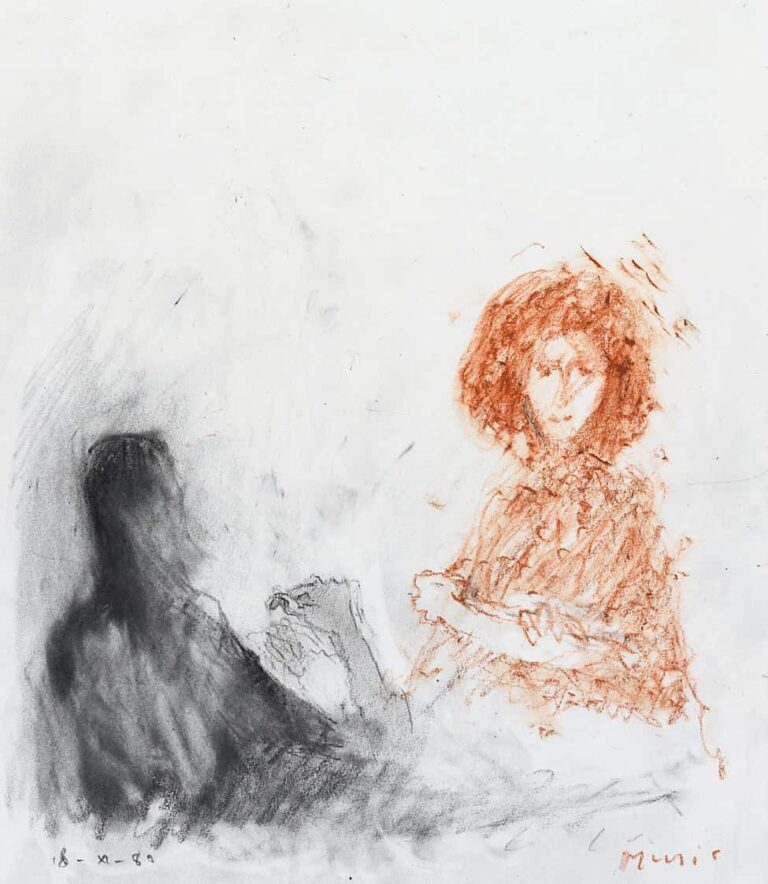
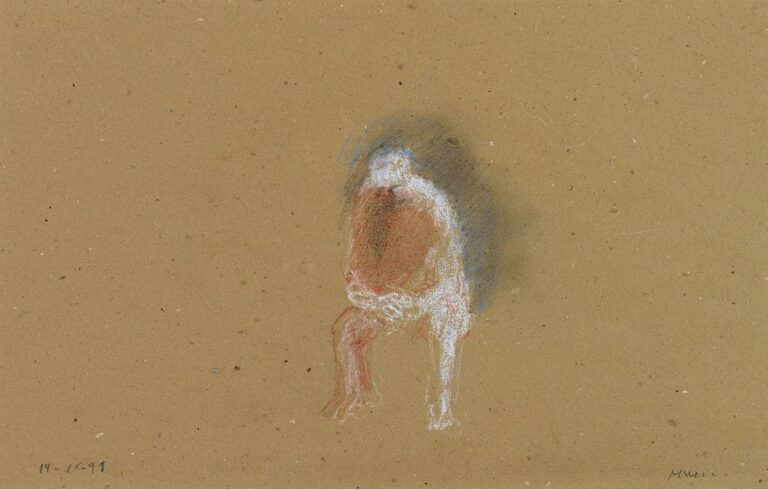
Music has given us outstanding examples of these images that come from within, with his self-portraits and his studios, in which, as an aging man, he shamelessly reveals his inner self, sometimes beside or opposite his friend Ida, in almost transparent beauty, as a witness – or companion? – unmoved, attentive and mysterious in a spiritual quest without end.
How could one not be moved by these images, whose sadness transforms into surprising tenderness, complete serenity? Camus said: „…Eternity is here, and I hoped for it. I do not wish to be happy now, but simply to be conscious.“
Zoran Music arrived there cheerful, even though he had witnessed the incredible cruelty of humankind.
Charlotte Hug